The International Political Economy of War and Peace in Colombia: Conflict Persistence and Negotiated Settlement
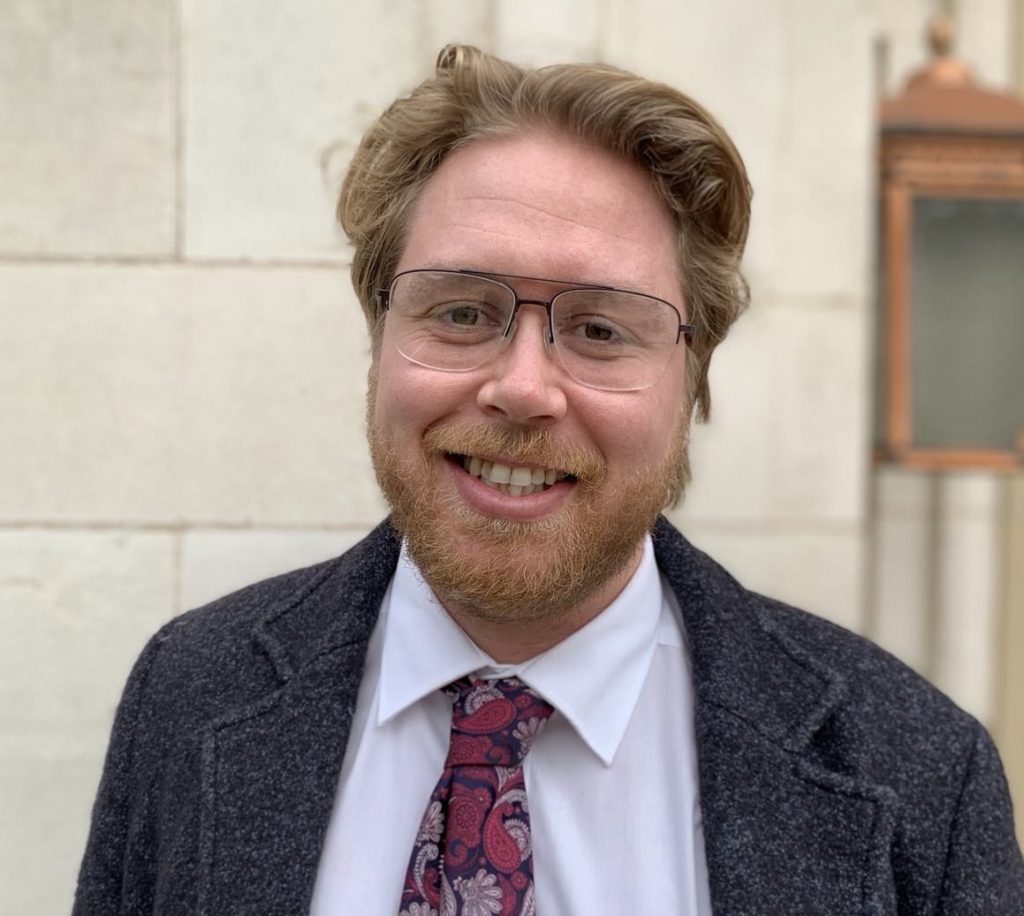
Dr Oliver Dodd
Pathway: Politics, International Relations and Global Language Based Area Studies
Department: Department of International Politics
University: Aberystwyth University
Mentor: Professor Berit Bliesemann de Guevara
Project Summary
The Colombian armed conflict was one of the world’s longest civil wars, leading to over 450,000 deaths and widespread displacement. In 2016, a historic peace agreement was signed, including ambitious commitments to rural and political reform, reincorporation of insurgents, and transitional justice. Despite these achievements, many of the conflict’s underlying dynamics remain unresolved and violence is resurging.
This fellowship will publish findings from my doctoral research into why the conflict lasted so long and why a peace accord was finally signed after decades of failed attempts. My research challenges conventional explanations, arguing that the armed conflict is not best explained by proximate factors such as state weakness, drug trafficking, institutional design, or the motivations of armed groups, but by the major political and economic changes that have reshaped Colombia’s state formation over time. In particular, my research argues that changes in the broader international political economy and the form of the Colombian state were central to making the 2016 peace agreement possible.
Through the dissemination of my doctoral findings across various publications, the project will enable stakeholders, academics, and policymakers to gain new insights into why armed conflicts persist as well as the conditions under which peace agreements are signed.
Goals for the Fellowship
- Finish developing a book monograph with a leading university press
- Finalise and submit an article to a leading academic journal
- Develop a bilingual and usable peace-building toolkit for conflict resolution practitioners in partnership with a peacebuilding stakeholder in Colombia
- Disseminate findings at a leading academic conference
- Disseminate findings in Colombia through two practitioner and policy-facing workshops
- Publish a public-facing article outlining the international political economic drivers of conflict resurgence in Colombia
- Start developing an external grant proposal
Advice for Future Applicants
Firstly, I would encourage future applicants to begin preparing their application early, particularly in terms of thinking about how they can develop as strong an application as possible. Secondly, I would encourage applicants to think about the institution and mentor fit, making sure the applicant makes a strong case as to why the institution and mentor they choose are well suited to the project. Thirdly, given that applications may be assessed by readers outside the applicant’s immediate specialism, I would advise applicants to make it as clear as possible what the key argument of the project is and the contribution to knowledge, as well as the policy relevance and/or impact. Fourthly, I would encourage applicants to ensure that the application is ambitious but also realistic. Finally, I would encourage applicants to lend credibility to the proposed goals, such as, where appropriate, by providing partner letters evidencing proposed collaboration.
Publications
Dodd, O. (2025) ‘War of movement: The political economy of conflict escalation in Colombia, 1990–1998’, Review of International Studies. DOI: 10.1017/S0260210525101411
Dodd, O. (2024) ‘Uncovering the sources of revolutionary violence: The case of Colombia’s National Front 1958–1964’, Small Wars & Insurgencies, 35(5), pp. 865–895. DOI: https://doi.org/10.1080/09592318.2024.2336635
Website: http://www.oliverdodd.org/
LinkedIn: https://www.linkedin.com/in/droliverdodd
ORCID: https://orcid.org/0009-0005-7260-5185
Email: Old37@aber.ac.uk